5 Tips to Get Your AC System Ready for Storm Season in Northeast Florida
June marks the official start of hurricane season in Northeast Florida, and for homeowners in Jacksonville, that means it’s time to prepare for heavy rain, high winds, power outages, and potential flooding. While most people focus on windows, roofs, and generators, your AC system is one of the most vulnerable and most expensive systems in your home.
A little preparation now can help prevent costly damage, system failure, and uncomfortable days without cooling in the peak of Florida heat. Always make sure to follow JaxReady for all the latest updates.
Here are five practical, high-impact tips to get your AC system storm-ready before hurricane season ramps up.
1. Schedule a Pre-Season AC Inspection
Before storm season intensifies, have a professional HVAC technician inspect your system. This is one of the most effective ways to catch small issues before they become major failures during or after a storm.
A pre-season inspection typically includes:
- Checking electrical connections for storm vulnerability
- Inspecting the outdoor condenser unit for stability
- Testing system performance and airflow
- Cleaning coils and removing debris buildup
- Verifying drain lines are clear to prevent water damage
In hurricane-prone areas like here in Jacksonville, a system under stress is far more likely to fail during power fluctuations or after heavy weather.
2. Secure and Protect the Outdoor Condenser Unit
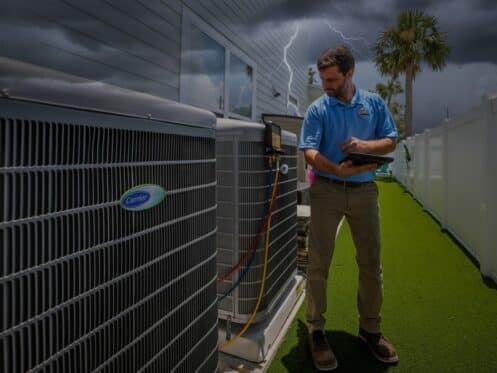
Your outdoor AC unit is directly exposed to wind, flying debris, and flooding. During tropical storms or hurricanes, unsecured equipment can shift, tip, or suffer severe damage.
Steps you can take:
- Ensure the unit is anchored to a stable concrete pad
- Remove loose yard debris (branches, furniture, tools) around the unit
- Consider a hurricane-rated AC cage or protective cover
- Check that vegetation is trimmed at least 2–3 feet around the system
Important: Never fully “wrap” your AC unit in plastic during a storm while it is running or immediately before use. It can trap moisture and cause internal damage if used improperly.
3. Install or Check Your Surge Protection
Florida storms are known for power surges and lightning strikes, both of which can destroy AC electrical components in seconds.
To reduce risk:
- Install a dedicated HVAC surge protector
- Ask your technician about whole-home surge protection options
- Ensure your breaker panel is properly labeled and functioning
A single lightning-related surge can damage your compressor or control board two of the most expensive HVAC components to replace.
If you’ve already invested in a new system, surge protection is one of the best ways to protect that investment.
4. Clear and Elevate Drainage Areas
Heavy rainfall and flooding are common during hurricane season in Northeast Florida. If your AC system’s drainage areas are blocked, water can back up and cause system shutdowns or interior damage.
Checklist:
- Clear leaves and debris from around the outdoor unit
- Make sure condensate drain lines are not clogged
- Confirm proper slope away from the home and unit
- If you live in a flood-prone area, consider elevating the outdoor unit (when possible)
Water intrusion is one of the most common causes of post-storm AC service calls in Jacksonville.
5. Know How to Safely Shut Down Your System Before a Storm
If a hurricane warning is issued, knowing how to properly shut down your AC system can prevent electrical damage and reduce risk during power fluctuations.
General steps:
- Turn off the thermostat
- Shut off power at the AC disconnect switch (usually near the outdoor unit)
- Turn off the breaker at the main electrical panel if instructed or during severe storms
- Do not restart immediately after power returns wait for stabilization
This helps protect the compressor and electrical components from surge damage when the grid is unstable.
Why AC Preparation Matters in Jacksonville
Northeast Florida’s climate creates a perfect storm for AC strain:
- High humidity increases system workload
- Frequent thunderstorms increase surge risk
- Coastal wind and salt air accelerate wear
- Extended cooling seasons mean systems rarely get a break
Preparing your AC system isn’t just about storm survival, it’s about ensuring reliable cooling all summer long.
When to Call a Professional
If you notice any of the following, schedule service before hurricane season peaks:
- Unusual noises from your outdoor unit
- Weak airflow or inconsistent cooling
- Rising energy bills
- Rust, corrosion, or visible damage on equipment
- Frequent breaker trips
Addressing these issues early can prevent emergency breakdowns during or after a storm.
Final Thoughts
Hurricane season in Northeast Florida is predictable but AC damage doesn’t have to be. A few proactive steps now can save you thousands in repairs and help ensure your home stays cool, safe, and comfortable when storms roll in.
For homeowners in Jacksonville, preparation is key and your AC system should be part of that plan.
Need Help Getting Storm-Ready?
If you want a professional inspection or help preparing your system for hurricane season, contact us today:
Phone: 904-379-1648
We help Jacksonville homeowners protect their AC systems before, during, and after storm season so they can stay comfortable no matter what Florida weather brings