Is a Two-Stage AC System Worth It? (Honest Comparison & Breakdown)
When it comes time to replace your air conditioner, one of the biggest choices you’ll face is deciding between a single-stage, two-stage, or variable-speed system.
If you’ve received a quote from an HVAC contractor, you likely noticed that two-stage air conditioners carry a higher price tag upfront compared to basic single-stage models. But does the improved comfort and efficiency justify the extra cost?
Let’s break down how two-stage AC systems work, what benefits they offer, and whether upgrading is worth your investment.
What Is a Two-Stage AC System and How Does It Work?
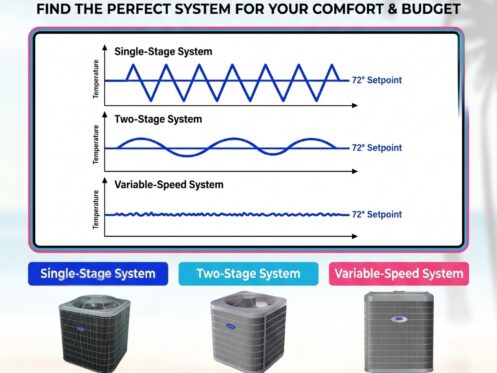
Traditional single-stage air conditioners operate like a simple light switch: they are either 100% ON or 100% OFF. Every time your home calls for cooling, a single-stage system kicks on at maximum power until the room cools down, then turns off completely.
A two-stage AC system features a compressor with two distinct levels of operation:
- Low Stage (~65% to 70% capacity): Runs for roughly 80% of the summer on milder days.
- High Stage (100% capacity): Kicks in automatically on scorching days when cooling demands peak.
Because the unit spends most of its time running on the lower setting, it provides a smoother, more continuous cooling cycle rather than aggressive start-and-stop blasts of cold air.
Key Benefits of a Two-Stage Air Conditioner
1. Superior Humidity Control
In humid climates, air conditioners do double duty: cooling the air and pulling out excess moisture. Because single-stage units cool quickly at 100% power, they often satisfy the thermostat before pulling sufficient moisture out of the air.
A two-stage system runs longer cycles at lower capacity. This extended airflow gives indoor coils significantly more time to wring moisture out of your home, eliminating that clammy, sticky indoor feeling.
2. Lower Monthly Energy Bills
Starting an AC compressor from a dead stop requires a large spike of electricity. Because two-stage systems run longer on the low setting with fewer start-and-stop cycles, they draw less power over time. Over the lifespan of your unit, these energy savings help offset the initial purchase price.
3. More Consistent Temperatures
Have you ever felt hot spots in the upstairs bedrooms while the living room feels freezing? Single-stage systems encourage these temperature swings. Two-stage units circulate air continuously, preventing hot and cold spots throughout your floor plan.
4. Quieter Operation
When running at ~65% power, two-stage units are significantly quieter than traditional models running at full speed. You won’t have to turn up the TV volume every time the AC kicks on.
Quick Comparison: Single-Stage vs. Two-Stage vs. Variable-Speed
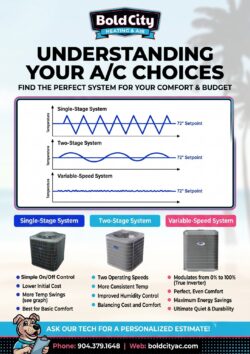
AC Choices between Single stage, two stage and variable speed
So, Is a Two-Stage System Worth It?
In short: Yes, for most homeowners living in hot or humid regions.
While a single-stage system gets the job done at a lower upfront cost, a two-stage unit offers noticeable improvements in daily comfort, humidity removal, and monthly savings. If you plan to stay in your home for more than 3–5 years, the comfort upgrade and reduced electric bills make it a smart investment.
Ready to dive deeper into system options, SEER2 savings, and local climate recommendations? Read our full breakdown to see if an upgrade fits your home: Explore if a two-stage system is worth it for your home.